
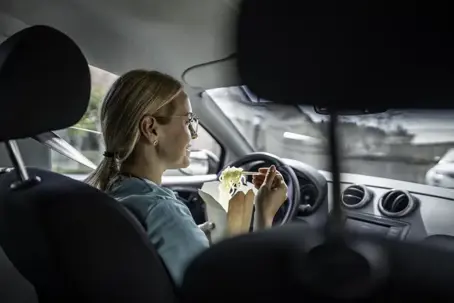
Most people think distracted driving only means texting while driving. In reality, many serious crashes in Louisiana happen because drivers are doing other things—like eating, reaching for items, adjusting music, or handling GPS directions. These distractions may seem harmless, but they can take a driver’s eyes, hands, or mind off the road long enough to cause life-changing harm.
If you or someone close to you was hurt in a crash caused by distracted driving, reach out to John Michael Morrow Law Firm through the online contact page or call (337) 329-8350 for timely support.
Understanding Non-Texting Distracted Driving
Distracted driving is anything that takes attention away from the road. Many people connect this only with texting, but distractions come in three forms:
- Visual: eyes off the road
- Manual: hands off the wheel
- Cognitive: mind off driving
Tasks that seem quick or simple can still create real danger. Even taking your eyes off the road for a couple of seconds at highway speeds means traveling the length of a football field without looking.
Non-texting distracted driving can include:
- Eating or drinking
- Using GPS or adjusting navigation apps
- Handling music controls
- Talking with passengers
- Reaching for items in the car
- Personal grooming
- Looking at roadside objects
Any of these can lead to a crash, especially when traffic shifts suddenly or visibility changes.
Eating and Drinking While Driving: More Risky Than It Seems
Many drivers consider eating behind the wheel a standard practice, especially during long commutes. But food can be one of the biggest sources of distraction.
Why Eating Causes Crashes
Eating often requires:
- One hand off the wheel
- Eyes moving away from traffic
- Attention shifting to spills or food packaging
Hot coffee spills, dropped food, and messy wrappers can all cause sudden reactions that lead to swerving or rear-end collisions.
How This Leads to Real Danger
Drivers who are eating may be slower to:
- Brake
- See hazards
- React to sudden traffic stops
- Notice pedestrians or cyclists
Even minor delays can result in serious injuries.
GPS and Navigation Apps: Helpful but Distracting
GPS systems guide drivers, but they can also take attention away from the road when used incorrectly.
Common Navigation Distractions
- Typing an address while moving
- Looking at the screen instead of the road
- Zooming in or out on maps
- Switching between apps
Safer Options
Drivers can make navigation safer by:
- Entering the address before starting the vehicle
- Using voice commands
- Placing the device where it’s easy to see without looking down
- Letting passengers help with directions
Crashes related to GPS distractions can be severe because they often happen at higher speeds or in heavy traffic.
Passengers and Conversation: A Silent Source of Distraction
Passengers can be helpful, but they can also create distractions—especially for teen drivers or new drivers.
How Passengers Distract Drivers
- Loud or emotional conversations
- Asking the driver to look at something
- Passing food or objects
- Children arguing or needing attention
- Movement in the backseat
Even a friendly conversation can pull a driver’s focus off the road at the wrong moment.
Simple Ways to Reduce the Risk
- Keeping conversation calm
- Setting expectations with young children
- Having another adult help with backseat needs
- Pulling over if a child requires attention
Staying aware of passenger behavior can help prevent avoidable collisions.
Reaching for Items: A Small Motion With Big Consequences
Reaching for something in the car may feel harmless, but it’s one of the most dangerous types of distracted driving. This includes:
- Grabbing a phone
- Picking up dropped items
- Reaching into a purse or bag
- Adjusting items in the seat or floorboard
These actions take your eyes off the road and often cause your upper body to move away from the driving position. This reduces control of the vehicle and reaction time.
The Risk Increases When
- Traffic is heavy
- You’re driving at highway speeds
- The weather is poor
- Roads are narrow or uneven
Even a short reach can cause a lane departure, sideswipe, or rear-end crash.
Music and Audio Controls: Fast Distractions That Add Up
Changing a song or adjusting the volume may take only a second, but that second can be critical.
Types of Audio Distractions
- Scrolling through playlists
- Switching radio stations
- Adjusting Bluetooth connections
- Responding to a podcast or audiobook prompt
These tasks require eye and hand movement, both of which slow your ability to respond.
Reducing the Danger
- Set your playlist before driving
- Use steering-wheel controls if available
- Let a passenger change music
- Keep the volume at a level where outside sounds can still be heard
This makes the ride safer for everyone on the road.
Non-Texting Distractions Can Still Lead to Serious Injury
Many Louisiana drivers underestimate how much small distractions increase the chance of harm. A simple shift in focus can lead to:
- Head-on collisions
- Rear-end crashes
- Side-impact accidents
- Collisions with bicycles or pedestrians
- Losing control on curves or wet roads
Non-texting distracted driving is just as dangerous as texting. It can lead to life-changing injuries, including:
- Back or neck injuries
- Concussions or traumatic brain injuries
- Broken bones
- Soft-tissue injuries
- Internal damage
For more information about roadway collisions, see the firm’s page on car accidents.
What to Do After a Crash Caused by Distracted Driving
After any crash—especially one caused by distraction—drivers and families may feel confused or overwhelmed. Taking a few steps early can help protect your health and your rights.
Important Steps
- Get medical care, even if symptoms seem mild.
- Take photos of the scene, vehicles, and road.
- Save any evidence of distraction, such as food containers or dropped items, to document the incident.
- Write down what you remember as soon as possible.
- Avoid speaking with insurance adjusters alone if you feel unsure.
These steps make it easier to understand what happened and what comes next.
Final Thoughts: Staying Focused Keeps Louisiana Roads Safer
Non-texting distracted driving is more common than many people realize. It affects drivers across all age groups and can lead to serious harm in just a few seconds. Staying aware, reducing risky habits, and planning ahead can help make roads safer for everyone.
If a distracted driver caused harm to you or someone close to you, getting clear information early can reduce stress and protect your next steps.
Have Questions? Contact John Michael Morrow Law Firm Today
If a distracted driver hurt you or a loved one, John Michael Morrow Law Firm is available to explain the process in clear, simple terms. Learn more about car accidents. To ask questions or share your concerns, visit the online contact page or call (337) 329-8350.